
Note 01
Galvanic corrosion in mixed-metal assemblies
Galvanic corrosion needs three things at the same time: two metals with different electrochemical potentials, an electrolyte bridging them, and an electrical connection between them. Remove any one and the mechanism stops. That is the whole of it, and it is worth remembering because most practical mitigations are simply a decision about which of the three to remove.
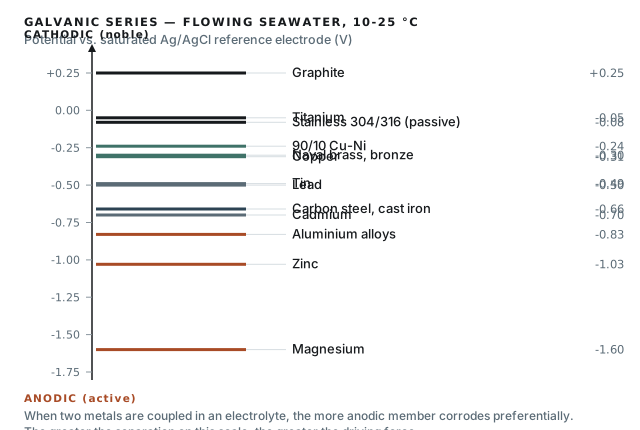
The metals are ranked by their potential in the service electrolyte. Seawater is the usual reference because it is aggressive, well characterised, and common.
The area ratio decides the severity
The separation between two metals on the series sets the driving force. What sets the rate at the anode is the ratio of cathode area to anode area. All the current collected over the cathode surface has to leave through the anode surface, so a large cathode feeding a small anode concentrates the attack.
This produces two outcomes that look similar on a drawing and behave nothing alike:
- A stainless steel bolt in an aluminium bracket: small cathode, large anode. The aluminium corrodes, but the current is spread over a wide area and the loss per unit area is modest. Assemblies like this survive for years in mild environments.
- An aluminium rivet in a stainless steel plate: large cathode, small anode. The same potential difference, the same electrolyte, and the rivet is consumed. This fails, and it fails quickly.
If you have to mix metals, put the noble metal in the small part. A noble fastener in a base-metal structure is usually tolerable. A base-metal fastener in a noble structure is not.
Coat the cathode, not the anode
The instinct is to paint the metal that is corroding. It is the wrong move. A coating on the anode will always have some defects, and each holiday becomes a very small anode still connected to the full, uncoated cathode. The area ratio becomes worse than it was before painting, and perforation at the defects is faster than the general attack would have been.
Coating the cathode reduces the area collecting current, which reduces the total current the anode has to supply. If you can only coat one side of a galvanic couple, coat the noble one. Coating both is better still.
Electrolyte conductivity and distance
Galvanic effects are strongly localised in low-conductivity electrolytes such as rainwater or condensate: attack concentrates within a few millimetres of the joint and falls away quickly. In seawater the current spreads over a much greater distance, so the whole of a connected structure can participate. A design that behaves acceptably in a rural inland atmosphere may not survive the same detail on a quay wall.
Practical mitigations, in order of reliability
- Do not mix the metals. Where the joint is structural and permanently wetted, this is the only mitigation that does not depend on workmanship.
- Break the electrical path. Isolating bushes and washers, and non-metallic gaskets, work well provided the isolation is continuous. A single missed washer defeats the whole detail, so it needs an inspection point.
- Exclude the electrolyte. Sealing the joint so that water cannot enter or cannot remain is very effective when it works, and completely ineffective once the seal admits water it cannot drain. Detail for drainage, not just for exclusion.
- Coat the cathode, as above.
- Add a third, more anodic metal — a sacrificial anode — so that both of the original metals become cathodes. This is the basis of cathodic protection and is treated in a separate note.
Two cases that are frequently missed
Graphite and carbon-filled materials are cathodes. Graphite gaskets, carbon fibre composites and carbon-loaded seals sit at the noble end of the series and will drive attack on steel and aluminium in contact with them. They are often specified as “non-metallic” on the assumption that they are electrochemically inert. They are not.
Copper ions do not need contact. Water that has run over copper or brass upstream carries dissolved copper, which plates out on aluminium or galvanised surfaces downstream and creates a galvanic couple where none was designed. This is why copper pipework is kept downstream of aluminium and zinc components, not upstream of them.
Download this note as a PDF for circulation or filing.
Standards and further reading
- ISO 21857:2021 — Petroleum, petrochemical and natural gas industries: prevention of corrosion on pipeline systems influenced by stray currents.
- ASTM G82 — Standard guide for development and use of a galvanic series for predicting galvanic corrosion performance.
- ASTM G71 — Standard guide for conducting and evaluating galvanic corrosion tests in electrolytes.
- MIL-STD-889 — Dissimilar metals (widely used compatibility tables, but check the current revision before citing).